
John Gotti: the recordings and protected jury behind his life sentence
The Gambino boss’s 1992 trial combined intercepted conversations with an insider’s testimony. A jury found him guilty on all thirteen counts, and the federal court imposed life imprisonment.
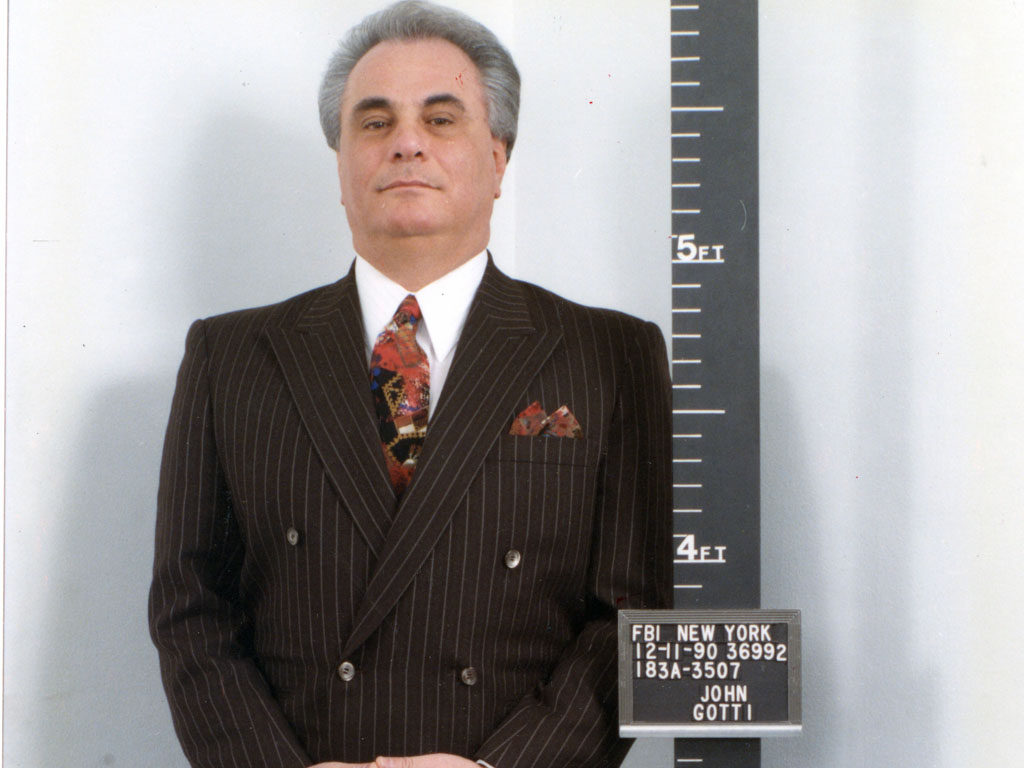
Power acquired through murder
John Gotti’s rise within New York organised crime followed earlier arrests and imprisonment. The FBI records a 1968 arrest connected with a plan to steal merchandise and a later murder case. After further imprisonment, he became a member of the Gambino crime family, an organisation involved in gambling, loansharking and other criminal activity.
On 16 December 1985, Gambino boss Paul Castellano and Thomas Bilotti were murdered outside Manhattan’s Sparks Steak House. Gotti subsequently took control of the family. His eventual federal conviction included ordering those murders. Expensive clothing, public appearances and earlier acquittals produced memorable press nicknames, but the case that ended his freedom concerned the criminal enterprise behind that public image.
Listening beyond the public-facing club
Investigators used court-authorised electronic surveillance to examine the organisation’s activities. The appellate judgment describes recordings from four locations over eight years. Important conversations were intercepted in late 1989 and early 1990 at a Mulberry Street building containing the Ravenite Social Club.
Devices covered the club, a rear hallway and an apartment above it. The apartment recordings supplied the core of the prosecution’s proof, according to the court. They captured discussions of illegal acts away from Gotti’s public appearances. His December 1990 arrest followed an investigation reaching into the organisation’s less visible workings.
An insider explains the organisation
Salvatore ‘Sammy the Bull’ Gravano, a senior Gambino figure, pleaded guilty to a racketeering charge and became a prosecution witness. His testimony supplied an insider’s account of the family’s workings and murders carried out at Gotti’s direction. The Eastern District of New York’s retrospective identifies his evidence and the recordings as the government’s two central components.
The trial also included more than thirty witnesses, recordings, photographs and documents. A later district court opinion records six days of extensive cross-examination of Gravano. His serious crimes and agreement with prosecutors were therefore matters for scrutiny. Recorded discussions and testimony had to be assessed together; becoming a cooperating witness did not place his account beyond challenge by the defence.
Protecting the people deciding the case
The jury was anonymous and sequestered. Jurors were identified by numbers, and their separation from ordinary life was intended to protect the proceedings from outside pressure. This was a substantial commitment for people asked to decide a long and highly publicised criminal case.
A later federal judiciary account records Judge I. Leo Glasser’s recollection of the human consequences. Jurors had been separated from loved ones for weeks, and he allowed private visits from their spouses at the hotel where they stayed. Such arrangements show the practical work surrounding a protected trial: safeguarding independence also required attention to the jurors’ wellbeing while they listened to the evidence and eventually deliberated.
Thirteen convictions and an unsuccessful appeal
On 2 April 1992, Gotti was found guilty on all thirteen counts. The case encompassed substantive and conspiracy violations of the Racketeer Influenced and Corrupt Organizations Act, together with separately charged criminal acts. RICO allowed the prosecution to present an enterprise and its pattern of criminal activity as part of the case against its leadership.
The judgment entered on 23 June 1992 imposed life imprisonment on the RICO and murder counts, concurrent maximum terms on the remaining counts and a $250,000 fine. Gotti challenged trial rulings and the denial of requests for a new trial, including arguments concerning material about Gravano’s credibility. In 1993, the Second Circuit affirmed the district court’s judgment.
The consequences behind the notoriety
The court’s retrospective describes Glasser’s concern that fascination with the Mafia could obscure the damage caused by its pursuit of money. At sentencing, he addressed the organisation’s costly influence on the community, including the construction industry. The case involved a network of coercion and criminal profit, with murders and obstruction forming part of the proven conduct.
Gotti spent the rest of his life in prison and died in June 2002. His case remains useful for understanding how organised crime leadership can be prosecuted: recordings, cooperating witnesses and safeguards around the jury worked together. Its outcome was a sustained conviction and imprisonment, not the enduring invulnerability suggested by his earlier press nickname.
Case timeline
Paul Castellano and Thomas Bilotti are murdered; Gotti subsequently becomes Gambino boss.
Gotti is arrested following the FBI and NYPD investigation.
The jury finds Gotti guilty on all thirteen counts.
The federal court enters judgment imposing life imprisonment.
Gotti dies in prison after his conviction was upheld on appeal.
Sources & case status
This feature concerns the deceased Gambino boss John Gotti, not his son or other relatives. The record describes life sentences on the racketeering and murder counts with the other prison terms running concurrently.
- FBI: John Gotti — How We Made the Charges StickFederal Bureau of InvestigationCriminal career, Castellano and Bilotti murders, surveillance, arrest and the 1992 outcome.
- United States v. Locascio and Gotti, 6 F.3d 924 (2d Cir. 1993)Original court record reproduced by JustiaPrimary appellate opinion reproduced by Justia: intercepted conversations, charges, sentence, fine and affirmance.
- U.S. District Court, Eastern District of New York: Retrospective 1990–2014U.S. federal courtCourt history, printed pages 43–44: Gravano, recordings, verdict, sentencing and the community impact of organised crime.
- U.S. Courts: How Courts Care for Jurors in High Profile CasesU.S. federal courtJudge Glasser’s account of the anonymous, fully sequestered Gotti jury and measures for its wellbeing.
- FBI: Surveillance Footage of John Gotti — accompanying official case descriptionFederal Bureau of InvestigationOfficial case description confirms 2 April 1992, thirteen counts, life imprisonment and death in 2002. This feature does not require using the FBI video on the site.
- United States v. Gotti, 171 F.R.D. 19 (E.D.N.Y. 1997)Primary district court opinion reproduced by Midpage: indictment, trial evidence, six days of Gravano cross-examination, verdict and post-trial challenges.
This feature describes the cited historical record. It is not a live custody or court-docket service.